


What’s the future of the white elephant of Flagler Street?

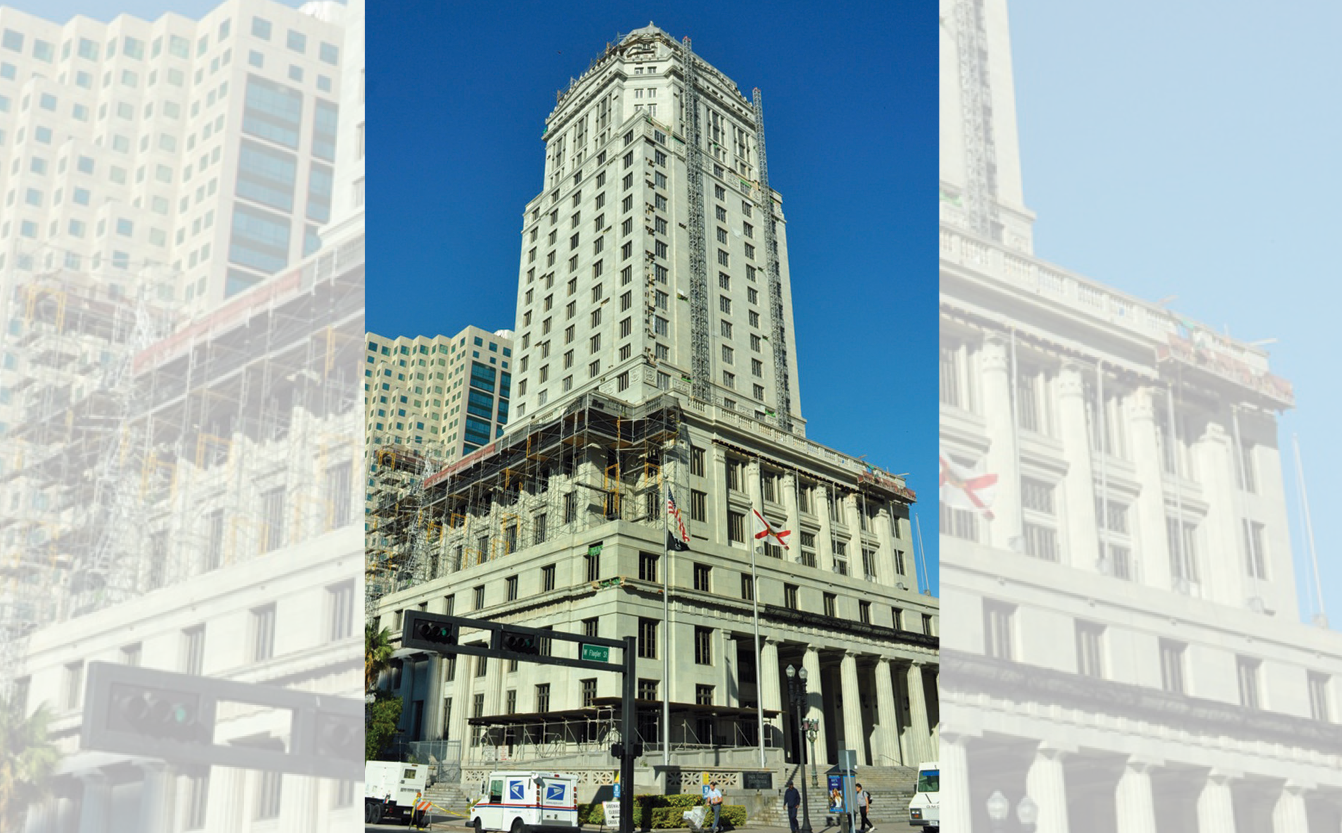
Crucial pieces of Miami-Dade’s financial underpinnings can be clarified in deadlines this week, as county commissioners approve a budget for next fiscal year and the following day learn if they have managed to get a cash bid to take their white elephant courthouse off their books.
The county’s budget – officially $14.3 billion but actually involving about $17 billion in spending – faces a Sept. 17 evening hearing followed by a commission vote that might not come until early Sept. 18, the day a second round of online bidding for the historic courthouse is to end.
By the end of that day the public will know the official spending plan for the county for the coming year, but it’s highly unlikely that we’ll find out the financial future for the courthouse then.
In fact, the biggest financial question of the week may well be not what is the final shape of the budget but will the county ever be able to unload a courthouse that is historically protected from the normal Miami process that sees older buildings routinely fall for larger and more profitable structures.
The courthouse at 73 W Flagler St. downtown has been replaced by a new one with a much longer name as the county sought to sell its historic structure in pay a fraction of the costs of the new building, whose actual price is caught in tangles with the developer that designed, financed, built, operates and maintains it.
The county has been auctioning the old courthouse online on GovDeals.com in hopes of getting a buyer. The auction had been scheduled to close Aug. 28, but despite getting nearly 50,000 views and visits in its first weeks on the site it got no bids at all and the process was extended to Sept. 18.
It’s not a simple sale. The building is historic, decrepit and physically constrained. Alterations will be limited – the county held two meetings with groups of potential developers and outlined all the restrictions. The minimum bid was $35.41 million, but the actual cost of the building would include an unknown amount more to refit it for use within the county’s parameters.
The online auction was itself a last-ditch effort to sell the courthouse. In an earlier try, it sought a $53 million package and got a bid from local developer Russell Galbut, who offered $33 million plus the swap of some downtown Miami land that he said was worth $20 million. The county negotiated but rejected that deal. Now it’s chasing any deal at all.
The courthouse has a troubled structural history. It rose atop an earlier red-domed limestone courthouse erected on the site in 1904. The old building remained as work began in 1925 on the neoclassical 28-story courthouse that would replace it as the tallest building south of Baltimore. Then the 1904 building was removed piece by piece as the new building covered it.
But when the new building reached its tenth story it began sinking into the soft limestone beneath it. Work stopped until massive concrete columns could be poured deep into the limestone as reinforcements. The structure was finally finished in 1928.
For decades, however, the building has been frequently repaired, internally and externally, and water has flooded the basement where the spalling concrete columns remain visible. That is the historic building the county is trying to sell for a buyer to maintain.
Mr. Galbut had seen his payout coming by constructing another building on county land beside the courthouse. We can only hope some creative bidder can see a way to buy, revamp and use the now-vacant building creatively yet fit within county rules.
And if not? The county could reduce its restrictions, settle for less than the current minimum bid, give away the building rather than pay $1 million or more yearly to keep it from molding and crumbling, or keep on trying until new officials are elected and have to deal with the white elephant of Flagler Street.
After all, if the cost of the building were zero, who could afford to take it?


Recent Comments