


Decades late and dollars short, port-to-port transit pushed

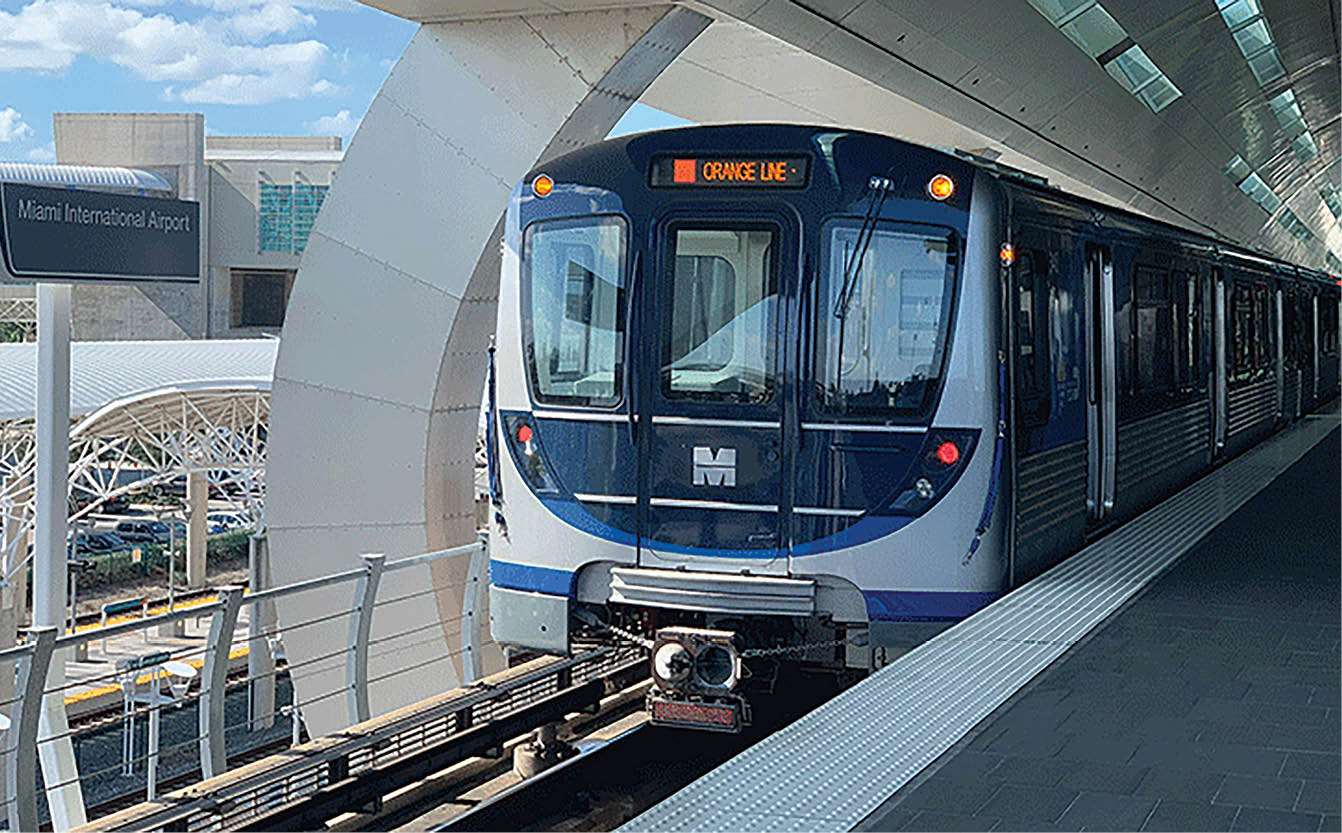
Planners last week pushed forward direct transit between PortMiami and Miami International Airport. It should have been running decades ago to everyone’s benefit, reducing traffic that clogs downtown.
The glaring need for port-to-port transit was spotlighted three decades ago. With public support, it then was written into plans that led to a voter-approved transportation surtax in 2002. But it disappeared – until now.
Last week, the Miami-Dade Transportation Planning Organization picked three likely routes that, if one falls into place, could offer direct one-seat trips between the air and sea ports by 2045. Planners approved a request by county Commissioner Danielle Cohen Higgins to adopt feasibility study concepts and direct the planning organization to get the corridor into the long-range transportation plan.
That’s far from approval, and even farther from operating. There’s no money. No route was chosen. No transit mode is selected. No easement for a transit line exists.
As planning organization Executive Director Aileen Bouclé explained, “This is the initiation of the federal planning process by entering this project as a concept in the outer years unfunded and allows us to start refining the project so I can bring back to the board a viable project for adoption.”
Why it took so long to get this vital transit to the starting line is without a simple answer, but we’ve got some hints.
The city called the cruise capital of the world has a ready market for this transit. Most cruise passengers arrive by air, people who need to get to a port that had a record 8,564,225 boardings and departures in fiscal 2025, up 4.02% from 2024 and adding capacity and travelers yearly.
That’s 8.5 million 10-mile trips yearly between the ports, far more than half the 15 million rider total on the entire 25-mile Metrorail during 2025. Metrorail ridership per system mile was 600,000. Capturing airport-seaport visitor traffic could yield 850,000 per system mile and make port-to-port trips Miami-Dade’s most travel-efficient transit.
It makes transportation sense. Unfortunately, getting cars off the road via port-to-port transit collided in the past with an economic reality: powerful interests would lose.
Taxis a few decades ago had little competition carrying people between the airport and cruise ships. Otherwise, cruise passengers could rent cars or ride a cruise line bus back and forth and pay the cruise company $11 each way at 2004 rates. Those were the options.
Before Uber, county permits to operate one cab were resold for well over $200,000, taxi companies were big political powers, and they had their drivers’ votes as political tools. They didn’t want a $2.50 transit ride to uproot their business.
In 2004, both PortMiami and Carnival Cruise Lines told Miami Today they had not discussed a Metrorail line with the county in many years. Carnival said it was satisfied with its shuttle buses.
Fast forward 20 years. In 2024, Ms. Cohen Higgins brought to the Transportation Planning Organization a request for the feasibility study that the group used last week. She hit opposition because major users of the transit would be tourists.
“Our job today is to move our workers and our residents – particularly low-income folks – to jobs and schools and health centers … so I have great issues for using our public money to basically get tourists from one spot to another, particularly when they’re not spending money in our county, right, when they’re landing at the airport” and going directly to cruise ships, Eileen Higgins, then a county commissioner and now Miami mayor, told the planning organization when Ms. Cohen Higgins (no relation) was trying to get port-to-port transit studied.
In the end, Eileen Higgins allowed the study only if the airport and seaport and not the overall county funded it. No one mentioned the 40,000 people who work at the ports who daily could use that corridor to reach jobs via other transit connecting to the line downtown – that could be millions of rides a year – or the cars that would leave downtown, traffic that Mayor Eileen Higgins now contends with.
Always pivotal for port-to-port rail are state and federal funds. The largest share of mass transit money comes from Washington. Availability fluctuates by administration, by year and by economic cycle. Last week’s vote just gets this transit to the federal starting line, putting it into the hopper for action by 2050 with no funds yet attached. But without that step, no federal funds would ever follow and the transit could never be built.
The recommended routes are sketchy. “This is an initiation of the project concept and not the setting of an alignment or the selection of a technology,” Ms. Bouclé explained. This “allows us time to sit down and have these conversations not just for the alternatives we looked at today but also any other right-of-way that might be available and any newer or emerging technologies that might be presented to us over the time horizon in that long-range plan” – possibly decades.
The study recommended two operating modes and routes.
One would be similar to Metromover with five stations: one or more at PortMiami, one downtown near the Metrorail Overtown/Lyric Theater Station and MiamiCentral Station, and one at the Miami Intermodal Center near Miami International Airport. That nine-mile route could cost $600 million to $700 million to build.
The second route would extend Metrorail from the airport to the Overtown/Lyric Theater Metrorail station, and a new 1.9-mile segment would go east, either over the Florida East Coast Railway Corridor or along Northeast Sixth Street, rising above Metromover and staying elevated over U.S. 1, taking a new bridge to Port Boulevard and entering a station on the seaport. It could cost $700 million to $800 million.
Not in the written study but added was Commissioner Raquel Regalado’s concept to use the corridor of the Florida East Coast Railway, which enters the seaport, and the right-of-way of Tri-Rail to the Miami Intermodal Center beside the airport. “The most expensive part of transit right now is buying these easements,” she said, “and in this case we already have access to the rail lines.”
The next step is up to Ms. Bouclé, to “hopefully bring back to this board a concept that’s financially feasible that we can move forward with funding partners at the table, federal and state, and right now it’s a concept with preliminary recommendations based on today’s technologies.”
Don’t buy tickets yet – trips are decades away. But at least a plan is now on the tracks with everybody seemingly aboard. That’s progress.



Jeff Cohen
May 1, 2026 at 5:14 pm
There used to be a track from the Hialeah Tri-Rail station just north of the Miami River all the way to the Seaport, but was abandoned from the old Miami Ballpark site in the market district to downtown, and a high school sits on the original alignment. A replacement alignment would need to get around that school.
To serve current Seaport employees, a diesel powered passenger unit could run from a short walk from the Brightline Station and Overtown Metrorail Station and roll directly to the Seaport. Track is already there.