


County pushes for mobile stroke unit

A two-year Mobile Stroke Unit pilot program is being sought by Miami-Dade County officials.
Strokes, also called “brain attacks,” were the leading cause of long-term disability in 2021 and the fifth-leading cause of death, according to the Centers for Disease Control (CDC). The percentage of those dying of stroke actually increased in 2021 over the previous year, the CDC reported.
The Miami-Dade Chairmans Policy Council & Intergovernmental Affairs Committee unanimously approved the resolution without discussion on Monday.
The resolution asks the mayor’s office to “identify and negotiate terms with a hospital, or hospital group such as the Public Health Trust … for the development” of a program to aid stroke victims.
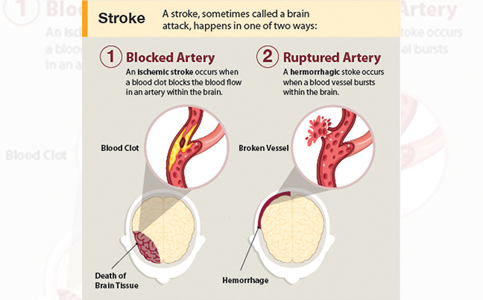
A stroke occurs when a blood vessel that carries oxygen and nutrients to the brain is either blocked by a clot (ischemic stroke) or bursts (hemorrhagic stroke). CDC studies show that “similar to cardiac arrest, critical medical care delivered within the first 60 minutes of the onset of a stroke can “mean the difference between life and death and can minimize the long-term negative effects,” such as changes in cognitive behavior, mental health, and weakness or paralysis.
Mobile stroke units have been found to significantly improve outcomes and reduce disability among stroke patients. According to the American Heart Association and other studies:
■Patients who received care from a mobile stroke unit were less likely to have disability three months after their stroke than those taken to the emergency department by a standard ambulance.
■Compared to regular emergency medical services, patients treated in a mobile stroke unit received a clot-dissolving drug more often, more promptly, and with less likelihood of stroke-related disabilities.
■53% of patients treated by a mobile stroke unit made a complete recovery from their stroke after three months compared to 43% of patients not treated on an mobile stroke unit.
The units are special ambulances equipped to diagnose and treat stroke quickly. When a stroke is caused by a blood clot blocking an artery in or leading to the brain, the team on board the unit can treat the patient right away with a clot-dissolving medication. If the patient is having a hemorrhagic stroke (where blood is escaping into areas of the brain), the team can administer medications that slow and reverse the hemorrhage while transporting the patient to the nearest approved stroke center for further care.
Cleveland, Houston and Los Angeles County already have added mobile stroke units to their first responder services. They are costly to equip and staff, according to a report in the Journal of Neurology, Neurosurgery and Psychiatry, but the other side of that scale is saving lives.
The resolution, introduced by commission Chairman Oliver G. Gilbert III, calls for the county to find funds for a mobile stroke unit in its 2023-2024 budget.
Presently 11 hospitals are designated as Primary Stroke Centers and 10 are designated as Comprehensive Stroke Centers in Miami-Dade County, according to the resolution.
“Developing a stroke response program in partnership with a primary or comprehensive stroke center could reduce existing stroke response times and benefit the residents and visitors of Miami-Dade County,” the resolution says.



Recent Comments