


As ballpark adds more events, county gets another lesson


The Miami Marlins just made a deal with Oak View Group of Los Angeles to book events at their ballpark, and why not? With labor strife sidelining baseball, they could be prepared to pack the stadium using concerts instead of games.
But while an event strategy could be a Marlins winner, it’s a lesson for government.
Even if Major League Baseball signs a quick labor contract and can play a full season, adding stadium events can fill team coffers that covid depleted.
Ticket sites today list only two non-baseball events there: this week’s Donda Experience Performance by rapper and producer Ye and two March days of trucks at Monster Jam. Every day without baseball is a booking opening to maximize the decade-old, $3 billion asset.
But while Marlins owners could profit from these events, the owners of the stadium – taxpayers who are on the hook for $3 billion – could not. Under contracts that built the ballpark, now branded loanDeport Park, the Marlins use, control and benefit from the stadium just as if they’d paid for it, though taxes funded it. They even keep all the money for the naming rights.
So by contract, the Marlins get all profits from the first 10 outside events yearly. They never pay rent, for baseball or anything, and don’t pay the county a penny from tickets, concessions, advertising, sponsorships or anything else.
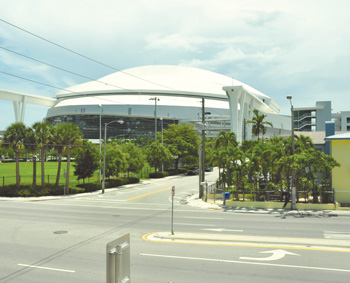
Taxpayers won’t benefit from non-baseball events in the $3 billion stadium they built.
Beyond those first 10 added events, it’s true, the Marlins keep only 25% of event profits. But taxpayers don’t get 75% – those profits upgrade a stadium that benefits only the Marlins. About the only reason the county owns the ballpark is so the team can use it 50 years rent free without property taxes.
The only government to collect at non-baseball events that the Marlins book is the Miami Parking Authority.
When the city borrowed about $100 million to add stadium parking, it cut a 20-year deal to sell the Marlins 5,500 spaces for each of 81 games at a flat price, this year $10.20 per space. Fans pay the Marlins a premium to park there.
But unless a labor stoppage reduces games, that’s all the Marlins ever pay for 5,500 spaces. If you go to a non-baseball loanDepot event and pay $25 to park, every penny goes to the Marlins.
Meanwhile, as the Marlins prepare to pull more money out of the public’s stadium, the county needs to gear up to pump much more into it.
There are two reasons.
First, when the county cut the 2009 stadium deal with then-team owner Jeffrey Loria it didn’t have enough cash flow, so it financed construction by super-costly borrowing. Very low initial payments balloon starting in 2025. Later, for six consecutive years the county will repay $118 million a year on just one bond issue yielding $80 million.
That’s inconceivable, but quite true. The huge burden is around the corner.
Second, plans to repay ballooning bonds relied on rapid and undiminished annual growth in Convention Development Tax income from tourism, starting at a 10% annual rise in 2011 and never falling below a 5% annual rise through 2049. There was no margin for hurricanes, recession or tourism drop for two years caused by a pandemic, so that plan went awry. The backstop is the general tax revenue that funds county services.
So as loanDepot Park enters its 11th year next week, Marlins owners who bought out Mr. Loria, who had cut the world’s best stadium deal, plan to reap money from the ballpark with non-sports events while the final commissioners who OK’d the worst deal in county history prepare to leave under term limits.
There is no reason the Marlins shouldn’t maximize profits after paying Mr. Loria a very hefty premium for his stadium contract. Full use of an asset makes business sense, especially when the Marlins use the asset free.
But there is every reason for commissioners to reflect on this one aspect of a public-private deal that should never have been.
The mayor and commissioners wanted a stadium so badly that they turned blind eyes to dozens of concerns. One glazed-over contract giveaway, for example, let the Marlins regulate pro soccer nearby. That blocked Miami’s aims for a soccer stadium next door and could now cost the city its only golf course and largest open space in another stadium deal.
As commissioners weigh deals to develop 20 acres of Government Center and run a monorail from Miami to Miami Beach and develop a hotel at Miami International Airport, there is an inclination to do anything to get the asset. They must look beyond a glittering asset to long-term impact – like a ballpark deal most now agree was a county disaster.



Jack Reacher
February 23, 2022 at 9:20 pm
$3 Billion. Taxpayers are screwed out of $3 Billion, including debt service, because County officials and elected officials did not listen to Michael Lewis 11-12 years ago. Michael Lewis consistently wrote columns using facts that the taxpayers were being screwed by a totally one sided lease with the Marlins scammers. Lewis was right. Next up – Mayor Suarez and lobbyists want the City of Miami to demolish 130 acres of Melreese Park – here we go again. Another scam.
Believe Michael
February 24, 2022 at 11:53 pm
Michael Lewis is right. Elected officials and government officials sure miss all the red flags. So many scams. Why don’t elected officials read Michael Lewis more closely? He is right!