


Mental health center OK sidetracked for a Jackson Health review

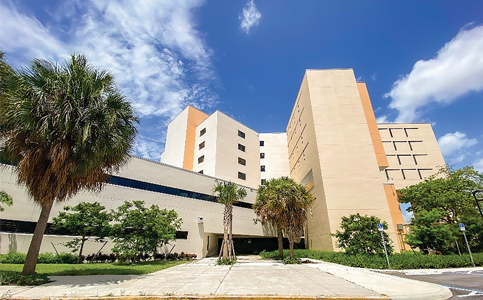
The Miami Center for Mental Health and Recovery, which is completed and long has awaited an opening, took another twist Tuesday when county commission Chairman Anthony Rodriguez moved to direct the county’s Jackson Health System to study the project’s soundness.
His motion directed Mayor Daniella Levine Cava to provide Jackson with all proposals and supporting documents submitted for the project and directed Jackson’s leaders to evaluate whether the proposed scope of services, staffing, operational assumptions, and projected costs are sufficient to adequately serve the intended patients.
The aim is for Jackson to provide a written assessment of the mental health center project before a June 16 commission hearing on the center’s future.
Echoing concerns of some commissioner that the center’s financial burden could not be sustained for more than two years that are fully funded, Mr. Rodriguez asked that the independent review examine the long-term operational and financial sustainability of the facility at 2200 NW Second Ave. to help ensure continuity of care and avoid future operational or fiscal shortfalls that could negatively impact patients, staff, and taxpayers.
“I remain committed to not simply opening a mental health facility, but ensuring it is built with the structure, resources, operational support, and long-term planning needed to provide sustainable, high-quality care for our community for years to come,” Mr. Rodriguez said in a written statement. “This facility must be positioned to truly serve patients, protect taxpayers, and deliver measurable outcomes in treatment, recovery, and public safety.”
Mr. Rodriguez expressed support for key components, including the inclusion of a courtroom, the relocation of the New Direction Residential Treatment Program, and the inclusion of behavioral health and transitional housing beds associated with the Homeless Trust. However, he stressed that additional verification and oversight are necessary before final approval.
“The focus must remain on developing a system that functions effectively, not simply opening a facility,” he said.
The seven-story, 181,000-square-foot center has been fully built, renovated and certified for occupancy since 2023, but has sat empty due to concerns about operational costs.
Once open, it is designed to provide a comprehensive, one-stop system of care for residents with serious mental illnesses, offering crisis stabilization, substance use treatment, residential and outpatient care, primary medical services, vocational training, transitional housing, and an on-site courtroom to expedite diversion from jail into treatment.
Funding for the first two years of operation is secured through federal and opioid settlement dollars, and additional revenue streams would ensure long-term stability.
Medicaid reimbursement is to cover part of the center’s mental health and dental services, as well as a substantial portion of primary care, ophthalmology and podiatry. The Miami-Dade Homeless Trust is to fund housing components. Workforce Florida is to support the Culinary Supportive Employment Program.
Retired Miami-Dade County Judge Steve Leifman has championed the project for years, saying that Miami-Dade is spending millions annually to maintain the fully built facility while it sits idle.
Miami-Dade County jails have become the largest psychiatric facility in Florida, with thousands of persons with serious mental illnesses incarcerated on any given day. Most are charged with nonviolent offenses and lack access to appropriate treatment. The county currently spends roughly $1.1 million daily, or $414 million a year, incarcerating people with mental health needs.



David Tucker
May 20, 2026 at 10:18 am
This a no brainer. The mentally ill have been fighting to have a voice forever. Politicians are fine w jailing them unless of course its their own son and daughter. Thank you Judge Leifman. You are a hero. To those Politicians who continue to jail the mentally ill.. shame on u. Lets have them spend one day at the dade county jail mental health unit. That will change their minds.