


Sylvester Comprehensive Cancer Center adapts radiation into individualized treatments

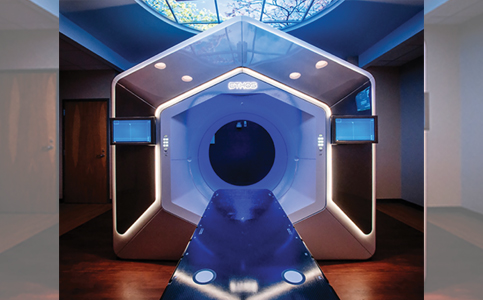
UHealth’s Sylvester Comprehensive Cancer Center has adapted radiation therapy into precise individualized treatment.
UHealth’s radiation oncologists have spent more than six years adapting radiation treatment from a verification step into an active treatment tool.
By using daily imaging, and clinicians recalibrate plans, each dose reflects the patient’s anatomy at that moment. This capability, known as adaptive radiation therapy, or ART, is now a routine part of care across UHealth’s radiation oncology network, said Dr. Markus Bredel, chairman and Sylvester professor of radiation oncology at the University of Miami Miller School of Medicine.
“Adaptive radiation is about responding to what we see today, not what we assumed weeks ago,” Dr. Bredel said. “The goal is always the same: deliver the best dose to the target while respecting what’s around it.”
Dr. Bredel says ART allows UHealth radiation oncologists to deliver medicine precisely.
“While ART is gaining momentum, it is not yet mainstream in cancer care,” he added. “Only a minority of institutions have adopted the precision-based approach, with some academic and National Cancer Institute-designated cancer centers, such as Sylvester, are serving as early adopters.”
At Sylvester, each treatment session begins with imaging that captures the patient’s anatomy as it exists that day.
“When changes are clinically meaningful, the plan is adjusted before treatment proceeds,” Dr. Bredel said. “The result is an iterative, patient-specific plan because adaptive therapy treats motion and change as part of the design, not a problem to work around.”
Sylvester radiation oncologists can now adapt radiation in real time and target tumors previously considered inaccessible, added Dr. Brandon Mahal, an associate professor and vice chair of radiation oncology at Sylvester.
“Standardization is the difference between having an advanced technology and actually mastering it,” he said. “When platforms, workflows and teams are aligned, precision isn’t dependent on where a patient is treated, it becomes the standard everywhere.”
Dr. Mahal said that all Sylvester locations are equipped with leading-edge machines capable of delivering advanced treatments such as ART.
“Our ability to adapt radiation in real time allows us to treat tumors previously considered inoperable or too high risk,” he explained. “It also reduces toxicity, lowers complication rates, produces fewer unplanned admissions and improves local control. The result is better safety metrics, stronger survival performance and better care for complex gastrointestinal, genitourinary and pancreatic cancers.”
Investigators at Sylvester have spent years pairing advanced imaging with biologic markers to refine prostate cancer treatment decisions. Researchers have developed models that use MRI techniques and liquid biopsy markers to help guide treatment intensity over time.
Dr. Benjamin Spieler, an associate professor of radiation oncology at Miller School and clinical director of UHealth’s adaptive radiotherapy program, leads clinical trial work in prostate cancer.
These trials represent novel advances in adaptive radiation, fusing AI-optimized adaptive planning with diagnostic-quality day-of-treatment imaging to deliver the highest-quality and most technologically advanced radiotherapy available in the world, he said.
Dr. Spieler is also leading multiple clinical trials studying precision-and-adjustment radiation techniques and a study that combines high-dose, multisite stereotactic radiotherapy with dual immunotherapy in the treatment of metastatic pancreatic cancer.
“Our cancer center and department leadership have empowered this adaptive program to become a national leader in cancer care, and Sylvester is at the forefront of a revolution in radiation therapy,” Dr. Spieler said. “Our mission is to deliver the highest quality care for our patients, and adaptive radiotherapy represents the best of personalized, precision oncology.”



Recent Comments