


Eight-step recipe for ducking public safety responsibilities

In less than five minutes last week, a Miami-Dade commissioner proved it’s easy to bury in red tape a breakthrough that everyone knows is vital: a path to end the cycle for thousands of mentally ill persons of homelessness, minor crime and jail, over and over again.
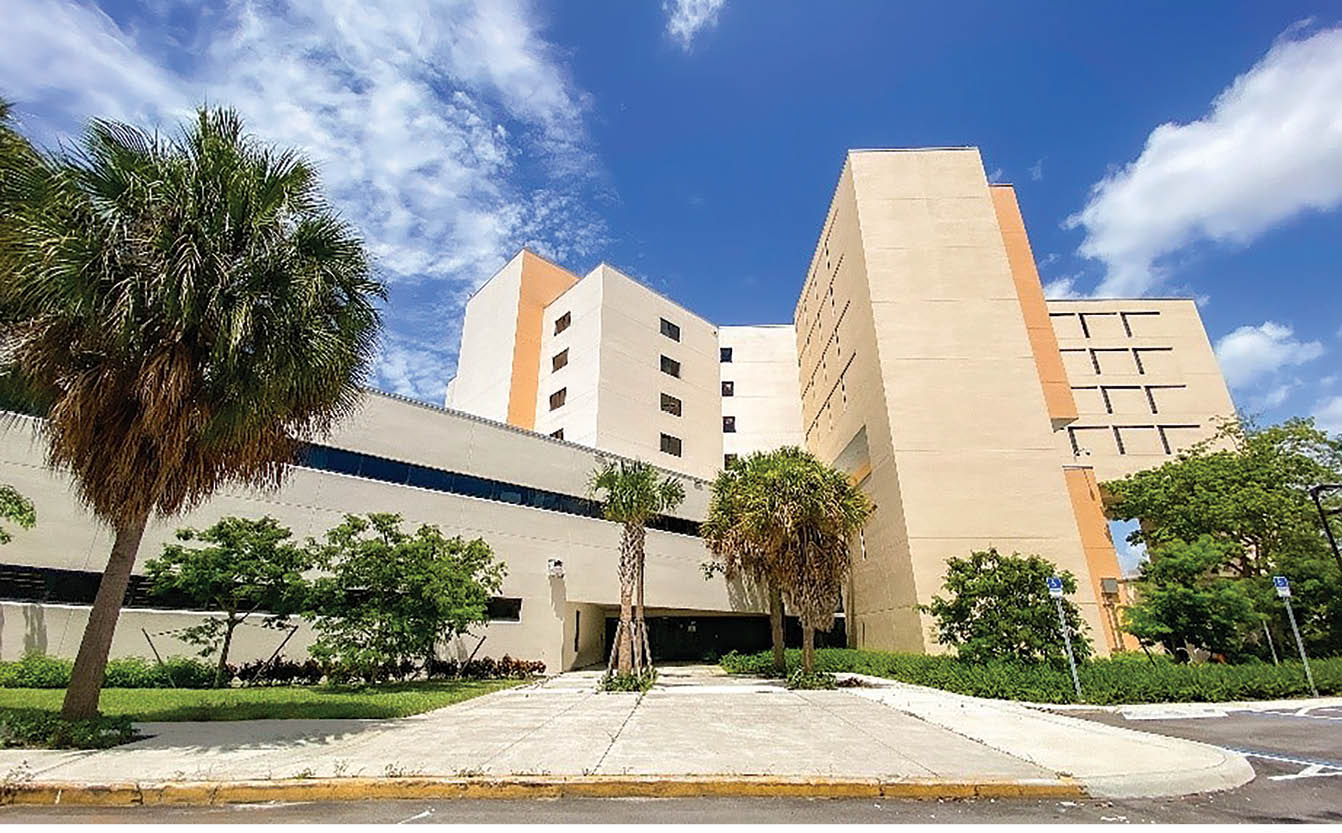
That’s what Danielle Cohen Higgins did to the Miami Center for Mental Health and Recovery, a $51 million capital investment that was completed in 2023 and has yet to open.
Under the commissioner’s direction, the ready-to-go center that every commissioner praises was put on track to stay closed, a wasted county investment and a squandered opportunity to help jailed mentally ill persons become productive Miamians.
Her trick was to demand proof of funding to operate the center for 10 years, an insurmountable barrier that no other county project has ever faced.
Here, in a nutshell, is the five-minute, eight-step roadmap to putting nails into the coffin of a center that has wide support and full outside funding for its first two years with not a penny of cost to county residents.
First, stay under cover. The center was not on last week’s agenda of the Intergovernmental and Economic Impact Committee, so when Ms. Cohen Higgins brought up a surprise motion at the meeting’s end, she could be certain that the multitude of center proponents wouldn’t be there.
Second, don’t mention what it is you’re going to hogtie. Ms. Cohen Higgins repeatedly referred only to “the Leifman Building.” Retired Judge Steve Leifman has been at the forefront of a two-decade drive for the center, but it is not named for him. She never uttered the words “mental health” or “mental illness.” Only insiders would know what she was doing.
Third, put the onus on someone else for the center’s likely death. Ms. Cohen Higgins successfully put responsibility on the shoulders of Mayor Daniella Levine Cava, though only the commission, not the mayor, can allow the center to open. The mayor has already requested an opening; the commission has been dragging its feet while praising the concept to the heavens.
Ms. Cohen Higgins said she moved “for the administration to work diligently to identify funding for the Leifman Building for a minimum of 10 years with specificity of where from our budget, whatever the number may be, that you are pulling from in order to fund this project that has been articulated time and time again something that needs to move forward as a priority for our community yet nobody wants to fund the money.”
She moved “to direct the administration to prepare a 10-year financial projection, find the money in our budget, specifically identify what it is you are not going to fund in order to fund this building, and bring it to us in the form of a report at our next committee hearing so that we can review it and actually deal with the numbers of the Leifman Building.”
In that motion, Ms. Cohen Higgins took her fourth step: double the size of the barrier to ever begin moving mentally ill persons from jails to treatment. The committee had been calling for a five-year funding plan, while committee member Vicki Lopez was saying that potential funding partners Miami and Miami Beach cannot commit that far in advance with their property tax revenues held hostage by pending state legislation. If they can’t commit for five years, they certainly can’t commit for 10.
In decades of watching this county government in operation, I can’t recall a single advance commitment for 10 years to fund operations. It doesn’t exist for police, or fire, or libraries or … anything. The “why” in this particular case only Ms. Cohen Higgins knows.
Step five is to allow too little time to solve a puzzle that the commissioner knows is impossible: the mayor was given a month to plan county operating budgets in detail for the next 10 years – and each year’s county budget comes in three thick volumes. Tell me that’s not an excessive demand.
Step six is even more excessive: show each and every penny being taken away from each and every current beneficiary of county funds for 10 years. That’s asking the mayor to list whose money will be cut so that every user of county services – or group getting county money – can be properly outraged at this project and the mayor. It puts a target on her back. [Hint to the mayor: try taking the money from commissioners’ offices and discretionary funding and throw the ball back into their court.]
Step seven is a natural: make sure others get the blame for fumbling a chance to get hundreds of homeless off the streets, decrease petty crime and reduce the jail’s population. Say as Ms. Cohen Higgins did that “ideologically everybody agrees that it needs to move forward” but “I feel like no one is really paying attention to us” in proving that the county won’t be stuck with a bill to help pay for it. Never mind that the county already pays for every sort of social service, it pays to deal with the homeless, it pays to deal with crime, and it funds its jail. There is no free lunch in doing what a county government is supposed to do.
Finally, in step eight, point out that it’s the fault of the media for grappling with the issue of mental health that the county commission is trying to lay at someone else’s doorstep. Ms. Cohen Higgins seemingly took her cue from Washington as she several times mentioned that the media are stirring the pot by calling for the mental health center to be opened now, not at some indefinite time when the county can miraculously predict operating budgets for every expense category a decade or more into the future.
To which we reply exactly as we did April 2 in viewing this strange reluctance to act: Refusing to open the mental health center is trying the same failed method over and over, akin to insanity.



Recent Comments