


Cost-cutting targets track to get Miami Beach rail line in motion

Written by Miami Today on June 4, 2025
Miami-Dade is in active talks with the Florida Department of Transportation on ways to cut the cost of a planned $1 billion transit line between Miami and Miami Beach that has been a 40-year dream.
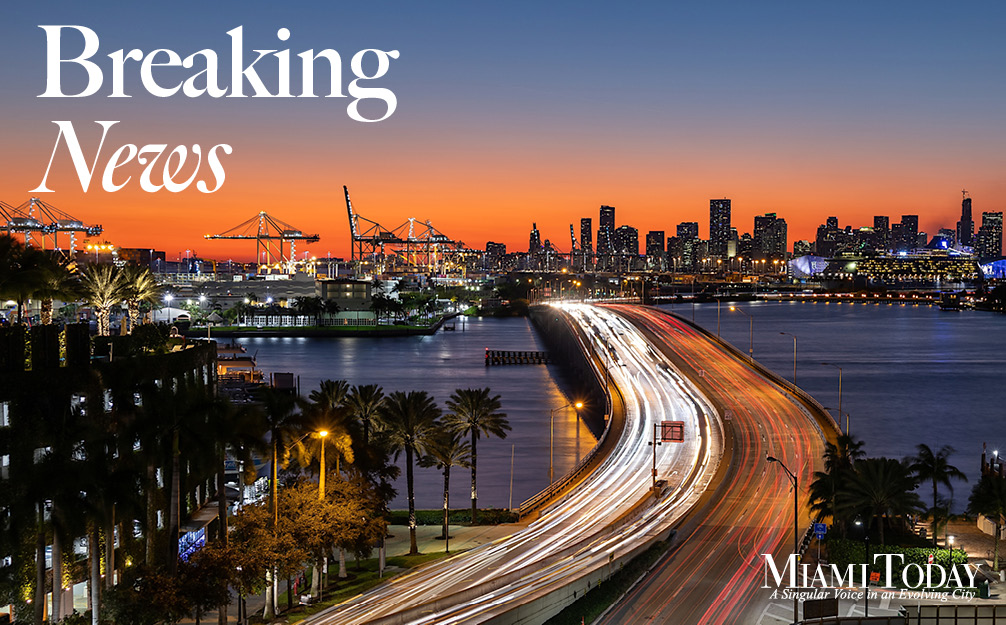
The cost point is focused on where the Metromover elevated guideway would enter Miami Beach along the MacArthur Causeway. The county is looking to see if there is a true need for all the planned pillars at that point to support the structure. Reducing the number in value engineering would both lower costs and lessen the impact of pillars intruding on auto traffic below.
The question is, “Is there any easy cost savings that we can do on the project so that we can basically try to move the project forward?” said Gabriella Serrado, chief of infrastructure planning for the Miami-Dade Department of Transportation and Public Works.
The aim is to begin moving forward on the new commuter transit by the end of the year, Ms. Serrado told the Citizens’ Independent Transportation Trust, which would approve the local funding for the transit from receipts of a half-percent sales tax reserved for new transportation.
“Once we’ve completed the value engineering,” she said, her department can hire a consultant to do the traffic analysis for the project. Analysis that was already done on the route’s traffic is now outdated, she said. The new study, she said, would take almost a year.
Asked if the county had yet applied for federal funds for the project, Ms. Serrado said the studies must come first.
“We need to go to our federal partners with solid numbers,” she explained. “We cannot say, hey, we believe this is going to be this and we don’t have final engineering plans.”
“Our federal partners really scrutinize a project, every aspect of it, schedules, timelines, contingencies in every line item, and if we’re not ready they will just bluntly tell us.” That has already happened to this project, she said.
The project earlier cleared objections of the City of Miami Beach and a National Environmental Policy Act Review.
The new route is to connect with downtown Miami’s Metromover on a one-seat ride to Miami Beach. A second segment is to run from downtown to the Design District.
Not mentioned in the transportation trust meeting last week were county administration comments that Miami Today reported May 22 that officials have been talking about replacing the entire Metromover system, which now serves only downtown Miami. “We are looking at options,” Chief Operating Officer Jimmy Morales told the county commission’s Appropriations Committee last month. “It could even be a rubber-tire option. We’ve gotten some proposals. We’re looking at that kind of stuff.”
Also subject to change was the earlier plan to build the Design District portion of the Beach line after the segment crossing the bay is finished.
Asked by Robert Wolfarth, the trust’s chairman, about the Design District segment, Ms. Serrado said the county is looking at moving forward on that as well, treating it as an independent transportation route.
“The Design District extension may be able to happen independently,” she said, moving forward without tying it into the Beach corridor.
The Beach Corridor plans replaced a $1.3 billion monorail previously proposed by private developers. Mayor Daniella Levine Cava changed those plans to switch to a government financed and constructed Metromover connecting to other county transportation as opposed to a standalone system.
In 2023 the Beach Corridor had a listed construction start of 2025 with a 2029 completion, but the schedule was set aside as the City of Miami Beach passed a resolution critical of the route, the traffic, the environment and public security.



Recent Comments