


Frost Science coral reef conservancy making research progress
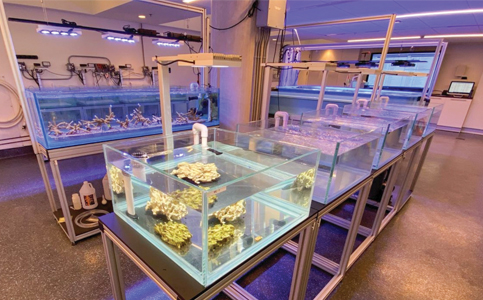
Since opening in August 2022, Frost Science’s ReeFLorida coral reef conservancy has made strides to better research Florida’s coral reef and extreme weather events.
In November 2023, Frost Science on Biscayne Boulevard in Downtown Miami hosted its first-ever ReeFLorida Symposium. Representatives from over 40 institutions including environmental educators, coral reef researchers, and conservation practitioners who work in the field of coral conservation at non-profits, and governmental organizations were in attendance, said Shannon Jones, Frost’s ecology and environmental restoration curator.
“During this four-day conference, these representatives collaborated on projects, discussed research findings, and developed education techniques,” she said. “They also discussed the marine heat wave experienced during the summer of 2023 and how we can be better prepared to respond to future extreme weather events.”
The coral reef conservancy is also an interdisciplinary marine science hub that provides opportunities for ongoing education and collaborative research, with the goal of conserving, restoring and sustaining Florida’s Coral Reef.
“New public program activations focused on Florida’s Coral Reef have been developed and added to the museum’s daily educational programming schedule as well,” Ms. Jones said. “We have surveyed museum guests to determine a baseline understanding of Florida’s Coral Reef, which will help inform the design of the new ReeFLorida level of our aquarium.”
Florida’s Coral Reef stretches almost 350 miles from the Dry Tortugas to the St. Lucie Inlet. It is the only barrier coral reef system in the continental US and benefits more than 6 million residents of Miami-Dade, Monroe, Broward, Palm Beach, and Martin counties. Throughout the years, the reef has been threatened by local and global impacts including climate change, disease, pollution and coastal construction activities.
Through ReeFLorida, Frost Science has been working with and hosting marine scientists from around Florida including the University of Miami, SECORE International Inc., Force Blue and the National Oceanic and Atmospheric Administration, to develop functional and sustained coral reef and biodiversity restoration techniques and strategies.
“We are now busy preparing for the second ReeFLorida Symposium,” Ms. Jones added. “The museum is in the process of establishing a coral nursery offshore in North Miami that will serve as a place to grow corals for future research and restoration.”



Recent Comments