


Florida International University starts training condo boards

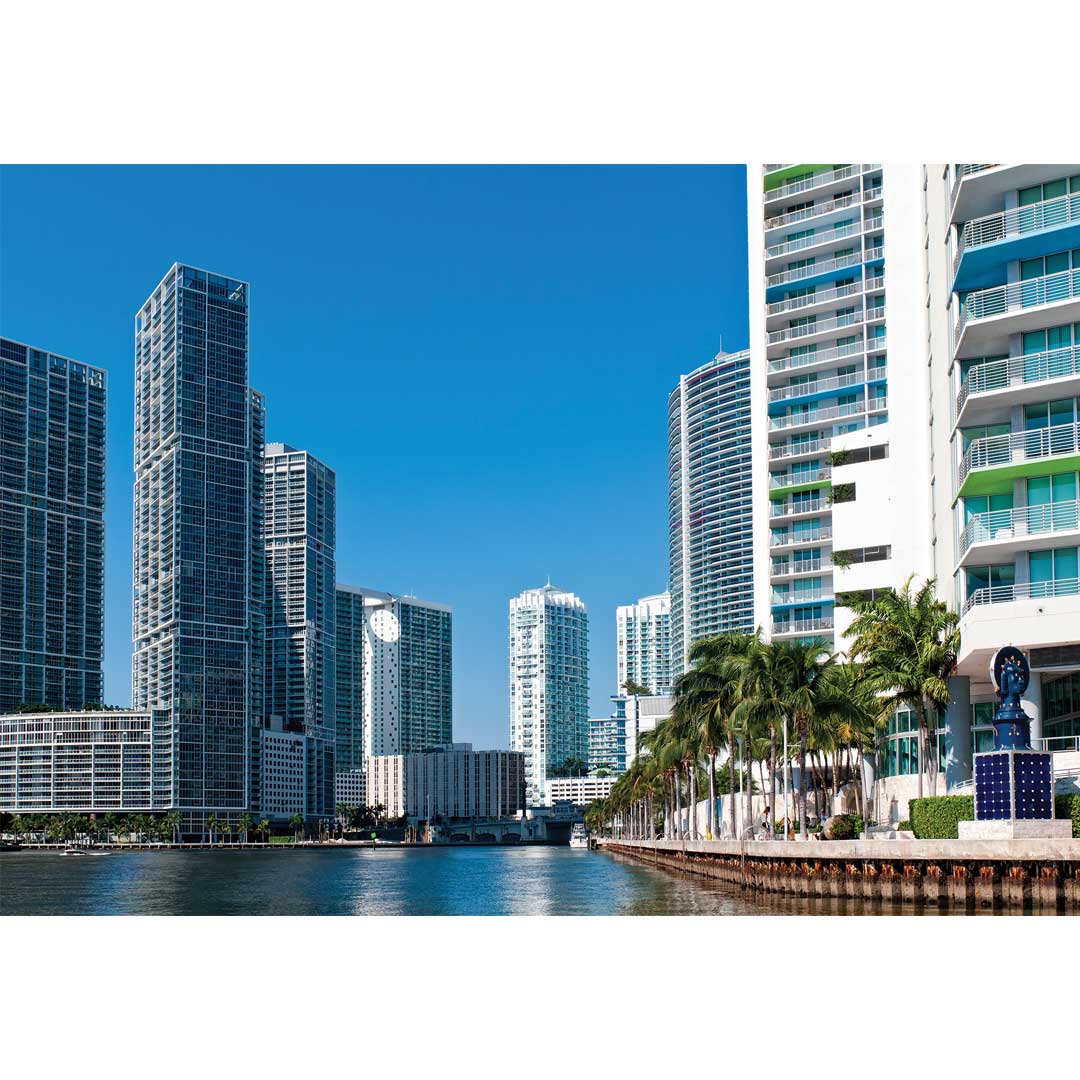
Florida International University has launched a state-approved Condominium Board Member Training Certificate Program in the only state where homeowner association board members must be trained.
FIU aims to provide a much larger understanding than most training provides. The university aims to meet community needs because the condominium ownership structure is essential to the housing stock in South Florida.
“There’s a state law that requires some level of training for all board members,” said Dean of the FIU College of Business William Hardin. “Ours is much more extensive than what the minimum is for the state of Florida, but we had to meet those minimum standards. The standards are out there, and the reason we have standards is because it is a responsibility that people take on as a member of a condominium board.”
Current board member training in Florida lasts 90 minutes, sometimes a little less, said Patrick Hohman, the professor for the program, veteran condo board president and professional condo association manager. Those classes mostly focus on legal fine points such as “the amount of time that you have to give before you get notice of the meeting, and when people can sign up to run for the board,” he said.
“They’re all important deadlines to know about,” Mr. Hohman added, “but … it struck me as being very just on the legal side, and when you run condos, whether you’re on the board or whether you’re a manager, I would say that legal issues come up less than 10% of the time, maybe only 5% of the time. Mostly, it is just the day-to-day activities of running the building as efficiently as you can.”
FIU’s program also differs from current training offered by law firms throughout the state and a few other vendors, said Mr. Hohman. In comparison, his course can take up to eight hours and is in online. At the cost of $145, he said, the course provides “a much broader management education, but also dealing with human psychology, which can be one of the most important elements that you have.”
“There are other programs out there that are similar,” said Dean Hardin. “I think the beauty of ours is we come from an educational background and we try to identify what do you really need to know versus what minimum standards do you need to meet?”
The tri-county area of Miami-Dade, Broward and Palm Beach has more than 9,000 condo associations, said Mr. Hohman. “That is the densest amount of condos anywhere on the planet. What better place to have this launch and be successful and start to change is there; then it could spread to urban areas everywhere.”
Many South Florida condo associations have multimillion-dollar yearly budgets, said Dean Hardin. “Those are equivalent to a small to medium-sized business, so they need to be managed that way. I think, by providing the opportunity for people to understand everyone’s role, we get a better management of the overall condominium association, as well as the building. Everybody here is worried about the structure and quality of buildings as we look back at Surfside, but they take some level of expertise and making decisions or hiring people to make those decisions for you.”
FIU’s course can be taken at any time with rolling admission.
“Every condominium association has a different cycle for electing members,” said Dean Hardin. “People have different training. We’re really talking about a market of people who are interested in this training that’s in the hundreds of thousands. It’s not really a cohort base component, it’s kind of a ‘pick up the knowledge when and where you want’ as opposed to more of a structured academic program like a graduate degree might be. It’s really to fulfill the mission of getting people better educated for a role that they take that’s already going on or perhaps going on in the near future.”
The condo ownership structure is essential to the housing stock in South Florida and Florida in general, said Dean Hardin. “We also have a lot of buyers of condominiums from out of state and from the international market, and part of the training helps them because it lets them understand what the laws and regulations are within the state of Florida, which may be different than New York or perhaps in Brazil, for example.”
The dominant system of management is portfolio management, said Mr. Hohman, “where one manager is anywhere from 15 to 25 different buildings.
I like to say that’s as crazy as having one church pastor in 15 to 25 different churches. How much are you going to get done? When I was a volunteer board president myself for more than 25 years, once we started renovations I had to volunteer up to 700 hours a year. That’s how broken the system is, and we’re trying to change that.”
“What I advocate … is that at buildings that are more than 30 years old – and it’s more than half the buildings in Florida – I think there should be a limit of 100 to 200 condo units per manager and that they earn a living wage, which generally would translate to about $60,000 a year. That’s not going to make me very popular with places that are paying $5,000 a year, but if you’ve got an old building and you’re paying $5,000 a year for management services, including a bookkeeper, to be realistic, how much management do you think you’re going to get? I hope that a few people will try out these new methods and then we’ll measure it and then we will start to strengthen the system so it’s a much better system. It has to be, for the sake of more people having homeownership.”
The importance of condominium associations has been acknowledged.
“I also recognized in this training as part of it is someone has to have the time; they have to have the commitment to serve in the right capacity to be on a condominium association board,” said Dean Hardin. “It takes time, effort and commitment, and everybody doesn’t have all those components. They may have interest but not time and may not be knowledgeable. What we want to do is to make sure everybody has at least a baseline of knowledge that allows them to make better decisions.”



Recent Comments