


How county is fighting a battle of the port vs. Fisher Island

I’ve never seen sausage being made, but it can’t be worse than watching Miami-Dade commissioners in three hours try to fix decades-long errors of omission that could cripple our seaport.
The challenge was exacerbated when commissioners met without facts needed to make a decision that at best will cost several hundred million dollars and at worst will the cost the county its second-largest economic engine, its cruise and sea cargo industries.
In the end, they voted without either full details or vital testimony. And if one commissioner hadn’t reversed course on a dime they wouldn’t have voted at all, risking pivotal action by outsiders before they could meet again.
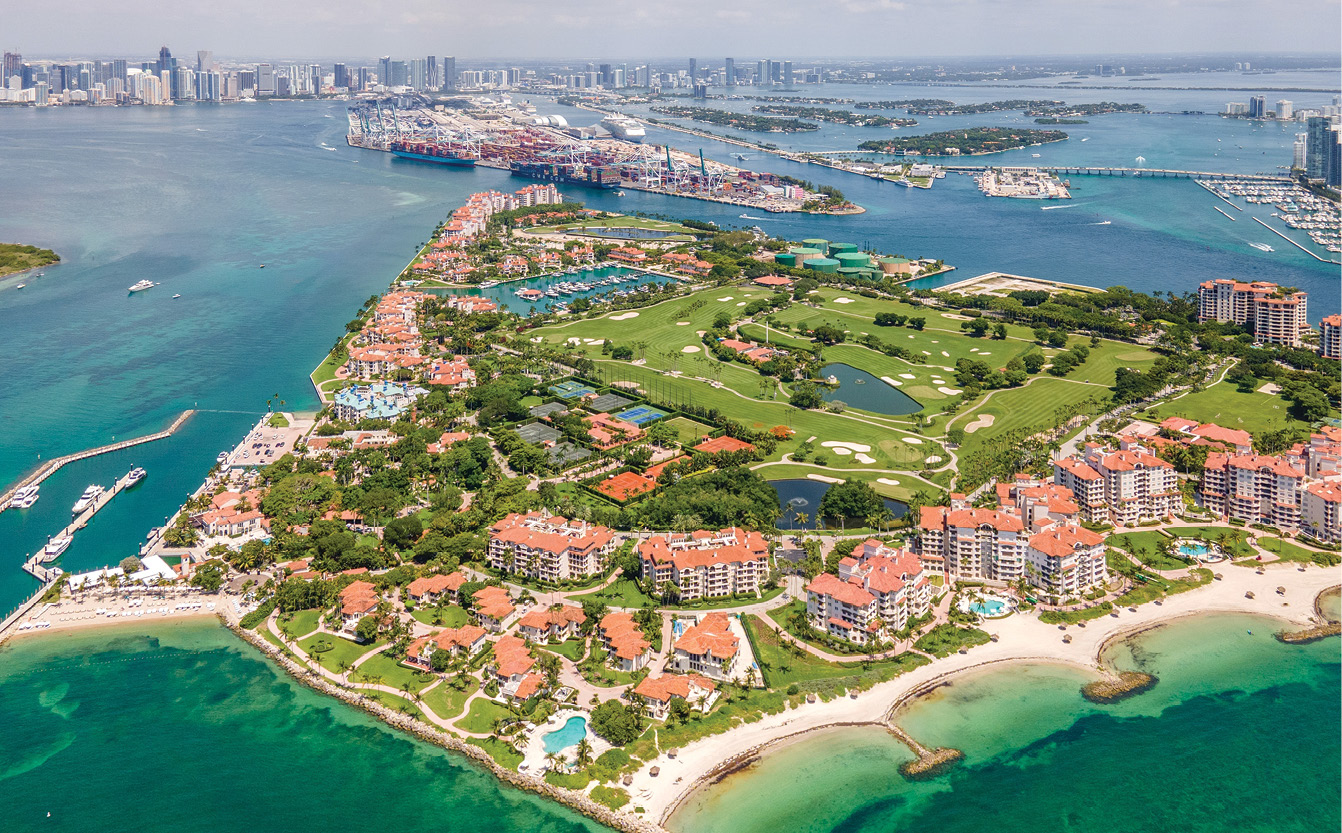
The puzzle that commissioners were tossed at the last possible instant was that the county-owned Port of Miami, unlike any other major US port, has never had on-site fueling. Now its off-port fueling hub is being sold for other use, and the port has no backup or space for fueling on its own land.
Fueling for 95 years has been on Fisher Island, which worked well when the island was a useless spit of land and the seaport was growing. But by the 1980s the port had become the cruise capital of the world and Fisher Island had become an enclave for the wealthy from around the globe. Now, with every speck of the island’s land sold for residences, the 9.6 acres used for fueling is incredibly valuable and about to be sold.
The issue of what to do about fuel for the future should have been apparent for decades, long before commissioners were suddenly told last week that the privately owned fuel hub land was under a sale contract for a condo tower on an island where tens of millions of dollars are routine condo prices.
The point that became clear is that because everything at the port had been functioning smoothly, nobody had been looking toward a day when its fuel lifeline might be severed – either by natural disaster or, in this case, economic realities that make luxury condos more valuable than ship fuel for anyone but the shipping lines.
The inattention goes back to mayors and county managers (when the county still had them) and commissioners and port directors since the 1980s. Couldn’t any of them have seen that the sole fuel source for the port was on a tiny island that was building what has become the nation’s wealthiest ZIP code of high-end housing? Or that there was no functioning backup source?
A resolution that eventually passed ordered the mayor to try to buy the land before it becomes condos or, if that fails, to take the land by eminent domain. Also ordered was for the port to monitor any nearby land that it might need someday, the same way the airport has done for years. Incredibly, land has never been on the tiny seaport’s radar.
That’s been costly. The fuel hub land was advertised for $200 million in May 2024. The county could have bid, but apparently nobody was alerted until far later.
“I was made aware of the property being for sale right around 2024 when the transaction happened,” Andrew Hacker, the port’s deputy director and chief financial officer, told commissioners last week. “I don’t follow the real estate market in terms of my duties, so I was not even aware that it was for sale.”
The administration began negotiating for the land this year. “The [would-be] buyer has been in negotiation with the [Fisher Island] Association and they have an agreement that says that this fuel facility will be eliminated,” said Commissioner Raquel Regalado, who says she has been working with the administration to get hold of the land.
While talks went on privately, however, the issue never came before commissioners until last week, and most of them knew nothing of what was going on.
They tried to piece together the story and decide what to do. The debate was whether to gather information properly or vote for action that was hammered together on the fly in a special meeting that was called for information only – and was to be followed immediately that evening by a final hearing and vote on a much-debated county budget. Talk about pressure!
“It brings me no peace and no joy to put this in such a rushed manner,” said commission Chairman Anthony Rodriguez. “I feel like it could have been brought sooner.”
Commissioners have scolded Mayor Daniella Levine Cava previously for bringing in vital issues at the last second and she has promised to issue red-flag reports well in advance on vital matters. “I feel like this should have been flagged,” Mr. Rodriguez said.
“We’ve known that this has been a problem for some time,” Ms. Regalado said, but she kept it off agendas via a formal “hold” while she worked with the mayor trying to resolve it. Hence, no commission action or even discussion until the last moment.
With no background, commissioners flailed, seeking details of the need to acquire a port fuel site and what alternatives exist. Like a leaky faucet, details dribbled out under questioning, but not all the key players were at the table.
“We haven’t had one ounce of public testimony,” said Commissioner René García, who nearly succeeded in shutting down the meeting before it could act. “This is not good governance. I’m not saying I’m against it, but to go down this path is very dangerous for the commission, for this administration, and for Miami-Dade County as a whole.”
Among those not present were either the owner and operator of the fuel site or the planned buyer – people with whom the county would be negotiating to obtain the land in a willing sale or those who would lose the land in an eminent domain action as a last resort. They were not invited, nor was the meeting notice issued for action the county was about to take.
As for being late to tell commissioners about the peril of losing port fuel – the equivalent of issuing a ship’s boarding call in the last 10 seconds – the administration fessed up under questioning.
“We apologize. Should we have been here six months ago? Should we have been here six years ago?” said Chief Operating Officer Jimmy Morales. “The truth is we now know that we were the only port that had this exposure [to loss of fuel supply]. We should have been here before.”
The clock is ticking. The longer the county takes to buy land it has taken for granted as a fueling hub for 95 years the costlier it gets – both because land prices in general keep rising and because the deeper into a sale the current owner gets, the more economic value the country will have to buy to obtain the land. The legal problems were made clear.
“Unless we start now,” Mr. Morales said, “we could be well into 2026 and now we’re really facing a Sword of Damocles over our head when they’re going to close [the fueling operation] months later in 2027.”
It was only in the last week or two, Mr. Morales said, that the administration realized it had no path other than to ask the commission to act to essentially force the landowner to sell. He said he knew he was going to “get beat up for being here late.”
Yes, years late. Chairman Rodriguez correctly called it the ninth inning. There are already two outs.
“I don’t like that we’re talking about eminent domain in the most expensive ZIP code in the country, nearly 10 acres that probably should have condos … but we of course cannot abandon our second-largest economic engine in this county,” Mr. Rodriguez said.
Caught in the bind, Oliver Gilbert III and Ms. Regalado offered dueling motions about how to negotiate and when to play the eminent domain card. One motion failed in a tie. Mr. Garcia’s move to adjourn failed in a tie. Another solution failed in a tie.
Commissioner Keon Hardemon then made a plea for the responsibility to keep the port open, because “this is not a joke.” So Kionne McGhee reversed his own motion to adjourn, Mr. Gilbert offered a tweak and Ms. Regalado’s motion passed three hours after the advertised start of the meeting.
Three hours to dissect and solve one of the county’s biggest economic challenges.
The correct technical name for the last-minute remedy comes from Mr. Gilbert: “Getting this right now is poopoo – like it’s really, really bad.”



G Meehan
September 24, 2025 at 3:27 pm
People get upset when Miami is called a banana republic… but really?
SeR
September 24, 2025 at 8:42 pm
There is lots of land at the port that can be used (go to google to see for yourself). To spend $200M or more is insane. The extra tax revenue from Fisher Island developement will offset some of the costs to move to the port.
Woon Lee
October 10, 2025 at 7:59 pm
As usual, Miami a day late and a dollar short lol.