


$109 million fare system on the road for transitway opening

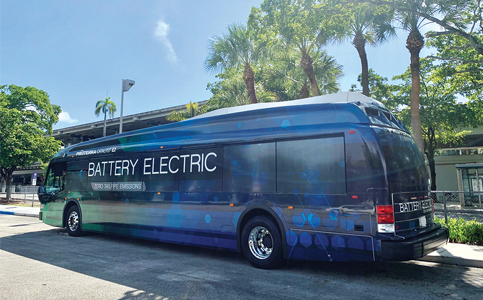
State-of-the-art Metrobus and Metrorail fareboxes and the software to link them to county transit records are coming down the road, starting with providing a way to collect fares on the new South Dade Transitway, which is expected to open next year.
Fare collection is not cheap: the county expects to acquire the system for $109.3 million, with $79.3 million of that coming from the countywide half-percent voter-approved sales tax to fund transportation expansions. The federal government is to pay the rest.
The next step on the journey to collect fares on the new South Dade electric buses came last week as the project cleared the Citizens’ Independent Transportation Trust, which watches over the spending of the county transit tax funds. That puts fare collection in the hands of county commissioners for approval to sign the contract.
The contract that the trust approved was just for the mechanical systems to collect fares. The trust OK’d buying 900 fare boxes for the county’s 850-bus fleet from Genfare LLC of Elk Grove, IL, in a contract for $64.7 million that includes buying the collection equipment plus maintaining the system and spare parts for six years, with options later to extend operating support up to 14 years.
County documents say that the system is expected to last 20 years.
The current system was installed in 2009 and getting spare parts to keep it going has been a continual problem. The county is trying to stretch the system until the new one is up and running.
In November 2017, said a complaint from the Transportation Workers Union, whose members operate transit, county bus operators reported 362 times that their fareboxes weren’t able to accept some or all forms of payment.
Indeed, the union said, 286 times that month transit control dispatchers told bus drivers to keep picking up passengers and just give the rides away free. The union claimed that the county was losing up to 25% of fare revenues because of the faulty system.
That issue festers.
“When a bus is operating and the payment system breaks down right now we’re having a lot of the operators just waive passengers onto the buses and to other transit systems, so the county is losing a lot of money,” Chairman Robert Wolfarth told transportation trust members. “We can’t stop operating the buses just because we can’t collect the fare, but [the contract being voted on] would solve that.”
Another contract is expected for the software to make fare collections functional. The county has yet to request proposals for that software, so its addition to total cost of collection operations has yet to be determined.
Mr. Wolfarth has in the past urged that any delays in either the hardware or software for collections not be allowed to delay the start of operations of the new Bus Rapid Transit on the transitway. That would mark the first operations added under the Smart Program, which was to bring six legs of new mass transit. The county began work on that program in 2016.
The new collection system, in addition to taking cash and the county transit system’s EASY Card, will be one of the first in the nation to go to open payment. “That means your Apple Pay, Google Pay, credit cards and debit cards are part of the program too, so it’s allowing us to modernize the program and allowing us to basically be prepared for the expansions that are coming down the road,” Carlos Cruz-Casas, assistant director the county transportation department, told the trust last week before it voted.
“This equipment is going to be for the entire system that we have,” he added.
“It will be just as easy as if you go into any coffee shop,” Mr. Wolfarth echoed Mr. Cruz-Casas. “You tap your card, you swipe your card, you insert your card. It’ll be that easy to pay for transportation and it will be global throughout the county also so you will not have to worry about different systems, which is a great advantage.”



Recent Comments