


Autos to take back seat in downtown Miami transportation plan

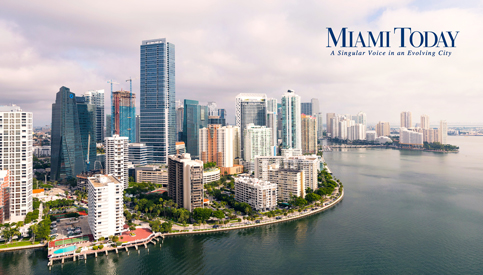
In a year or so a new transportation master plan should help speed more mobility in downtown Miami for the decades ahead. Automobiles take a back seat in the plan’s aims, with pedestrians at the forefront.
A $170,000 study upon which to base the plan won unanimous Transportation Planning Organization approval with aims far broader than the most recent plan for the area, which was drawn in 2003 in vastly different times for a vastly different downtown.
As the documents seeking a planning consultant for the study note, downtown has “experienced a tremendous amount of growth, especially in terms of residents,” and is far different than when the last plan was drawn in a downtown that essentially emptied out of people by 6 p.m. daily and lacked the residential towers that now seem to be everywhere.
The plan is to be created at the request of county Commissioner Eileen Higgins, who represents the downtown area. Once a consultant is selected, the study for the plan is expected to take 11 months.
The work order from the planning organization calls for “a people-first approach” to downtown mobility.
A key element is to evaluate best practices in emerging and future technology that is now being used “in pedestrian- and transit-oriented downtown areas.”
The consultant is to research “micromobility, integrated mobility hubs, event management, repurposing of roadways for exclusive bus lanes, water taxi systems, active mobility networks, and pedestrian/cycling mobility and safety.”
The document points to an urban core so changed from when the last study was done 20 years ago that downtown now has become heavily residential, and many residents don’t own cars, choosing instead to use transit, walk or cycle. At the same time, it points to the new mobility options that have emerged in those two decades. That change produced a downtown, the document says, that demands “multiple means of transportation and must accommodate multimodal transportation safely and efficiently.”
While the outline orders study of water taxis, micromobility, walkability, pedestrian and bicycle safety and bicycle networks, transit stations, connections to the Underline, the Commodore Trail and other newer entrants to urban transportation, it is virtually silent on any future for automobile transportation downtown.


DC
July 5, 2023 at 8:31 am
One way to make it more people-friendly is to ditch requirements for parking podiums. If you want to live downtown, buyers and renters will have to give up their cars. Period.
MiamiCityMan
July 5, 2023 at 7:29 pm
Eliminate parking requirements for all development in downtown and Brickell.
Jeremy Weinstock
July 6, 2023 at 9:17 am
Let’s see what happens. Been talking about expanding mass transit in Miami for over a decade now.
Robert
July 7, 2023 at 9:20 am
Mass transit to move from 13th street to 9th street makes no sense. Micro mobility and driverless cars will lead the way
Alex Adams
July 6, 2023 at 9:29 am
Downtown does not have parking requirements. Developers still build it in for financing reasons and convenience. Even that is excessive. Most garages above 6-7 floors becomes a 10 min entry/exit and dizzy drivers entering the roadways
Ernest Bellamy
July 6, 2023 at 4:10 pm
This is very encouraging to hear. In comparison to the previous Downtown Transportation Master Plan’s Development Scenarios, the current level of Downtown Commercial and Residential Development has exceeded all expectations. As stated then, as now, Downtown Miami’s current traffic congestion problems are caused by its development successes. The future proposal should retain some of the ‘then’ novel ideas while adding grounded solutions for the future. The sunsetting Masterplan was marred by the unwillingness of the government and agencies to follow through on the tough decisions.
Many proposals in alignment with the old masterplan were mothballed as being too expensive or novel, like the grand boulevard plans for I-95, and I-395. Decisionmakers weren’t convinced to follow through, leaving us with outdated infrastructure that hasn’t changed and is currently stressed by oversaturation. Moreover, we have new items which we did not request, such as a near billion-dollar double-decker I-395 bridge over Biscayne Boulevard and hopefully an adequately program and maintain public spaces underneath it.
For the next masterplan could we commit to not having any pie in the sky alternatives?
Despite our dreams of autonomous vehicles and flying cars, we aren’t quite there yet. Our eggs shouldn’t be in a basket that hasn’t panned out over the past few years of salivating over the next tech startup promising a new future. Whenever this technology becomes available to another community, Miami can follow. The risk to businesses and residents is too high for Miami to die on the bleeding edge of transportation innovation. From autonomous buses which follow a stripped paint line, to on demand flying vehicles, Miami has pursued these ambiguous technologies with no results for far too long.
A few logical solutions from the past study should still be pursued with new vigor, and new ideas should be incorporated into the next Downtown Transportation Master Plan. Here are a few examples:
1. Continue to demand items which were in the previous study which make sense.
2. Build a Bay walk and River walk worthy of Miami’s global reputation in a similar style and approach to what Chicago and New York have accomplished in the last 20 years.
3. Government (City and/or County) should acquire the former Herald Building Site and expand/create more Bayfront Open space for residents.
4. Baylink, previously called for but not followed through after mutating into a casino intersection scheme; its time to close out its current iteration, the Metromover expansion to Miami Beach.
5. Metromover expansions, previously called for but not followed through North to Wynwood and completing a Brickell Loop would help with mobility issues on oversaturated streets.
6. Extension of Metrorail I the downtown core. Brightline is all the rave these days due to flashing branding and modern food/beverage train service and comfort. Metrorail just brought an all-new fleet of cars and hasn’t had an extension in 20 years. Tri-rail is finally coming downtown after years of delays, bringing new commuters from points west along the South Florida spine of I-95 to all of downtown. With the Improvements Miami Central Station affords downtown, why not lessen the burden of cars on the road with extending Metrorail where neither service currently plans to cover. Why not have a new extension branch north from the main trunk leg of the green line Metrorail, parallel to the bright line tracks, and have stations between Historic Overtown/Lyric Theatre Station and 79th Street. With four new stations within the general downtown scope of the downtown masterplan at 14th street [spanning 14-16th streets (with a Metromover transfer station to the Omni loop line)], 20th Street, 29th Street/Wynwood, and 36th Street/Design District.
7. There should be efforts made to preserve the existing canopy of trees and to grow native and natural shade trees. For new developments, too many mature trees are cut down, replaced by saplings that cannot survive the intense heat and humidity. In light of a reduction in mature trees within downtown, walking on hot days is unbearable.
I’m looking forward to who will be selected as a consultant to lead this next downtown transportation masterplan.
It will ultimately be the follow-through of those we entrust to accomplish things that will be the real test. Unless they do meaningful progress, we will be doomed to more clogged streets and inadequate infrastructure to walk, bike, drive, boat, and take a train.
Grato de Cardenas
July 7, 2023 at 3:52 pm
Why would anyone want to own a car if you lived downtown?
Encourage mass transit, provide exclusive lanes for buses, pedestrianize Flagler, give incentives to retail, restaurants in the area.
Ericman Family
July 7, 2023 at 4:20 pm
We need flood protection infrastructure ASAP !! All monies from the federal government for infrastructure in FL must be used directly for drainage and flood protections. It must come first! Desantis is a huge failure. He’s costing FL their future for his own personal gains. He’s a dangerous, ignorant, biased and corrupted politician. Climate disasters are continual, and he’s still thwarting progressvwhile Floridians lose everything! He has no use for South Florida and will do everything he can to harm it. His GOP cult policies and climate change infrastructure are the mabsolute most crucial and imminent threats period !