


Move to reduce Biscayne Bay nutrient pollution advances

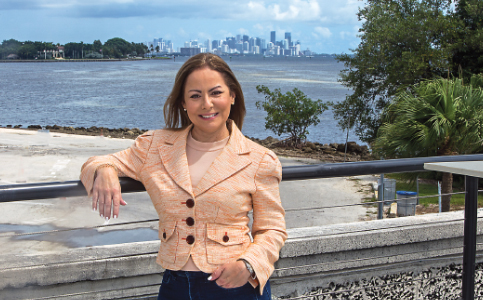
A year after the Biscayne Bay Watershed Management Advisory Board was formed to advise the county mayor and commission on issues affecting Biscayne Bay, it has completed or is working on 51 of the 62 recommendations from the Biscayne Bay Task Force, which shut down in 2020.
Among these, the group is developing a reasonable assurance plan to reduce bay nutrient pollution. The plan is to set nutrient reduction targets and goals and then put into action projects to meet them, Chief Bay Officer Irela Bagué told Miami Today.
To that end, the plan that’s to go to the Florida Department of Environmental Protection in September will describe procedures to monitor and report results; offer commitments by stakeholders to meet the proposed corrective actions; explain how the county and municipalities will meet the pollutant reduction goals; and schedule restoration projects, including funding sources.
The assurance plan initially segmented an area where the county has seen fish kills, algae blooms and seagrass die-offs. The municipalities involved are North Miami, North Miami Beach, Biscayne Park, Miami Shores, North Bay Village, Village of El Portal, the City of Miami and a portion of unincorporated Miami-Dade.
Among initiatives these municipalities proposed to reduce nutrient pollution in the bay are stormwater improvements and fertilizer education.
By entering into the self-proposed plan and segmenting a very specific area, the county is saving almost a decade of work, Ms. Bagué said.
“We started where we know that the nutrient pollution is extremely high and will eventually become inevitably impaired and [enter] a list by the State of Florida and force us into more or less a regulatory action. Before we get to that regulatory action, the state allows us to take our own approach,” Ms. Bagué explained. “We’re providing the state with reasonable assurance that what we’re saying, we’re going to do.”
The reasonable assurance plan is to become part of a much larger initiative, the Biscayne Bay Watershed Restoration Plan. Being involved in the assurance plan opens up opportunities for the county and municipalities to get state grants for septic to sewer conversion, she said.
In addition, the advisory board is preparing for a Sept. 17 International Coastal Clean-up Day and an Oct. 20 Imagine a Day Without Water campaign.
On the 21-member board are three county commissioners and 18 representatives from organizations such as Florida International University, the National Oceanic and Atmospheric Administration, city mayors and the Miccosukee Tribe of Indians of Florida.
The group has also been advising on the county’s Marine Debris Reduction Plan to remove derelict vessels, old fishing traps, and any trash coming from stormwater systems into the bay. The county removed 13 derelict vessels in 2022 and 51 in 2021.
The board is also applying for a grant to deal with stormwater pollution by installing storm drain systems able to capture trash and also install QR codes in all stormwater drains throughout unincorporated areas.
The aim is to get residents involved so that if they see one drain that requires maintenance, they can easily report it to authorities via the code. “It’s a more community-wide way of helping and also educating the public,” Ms. Bagué said.
For over a year, the county has partnered with the private sector to reduce the use of plastic and to inform the public about the countywide fertilizer ordinance – in order to reduce nitrogen and phosphorus entering sensitive water resources and to improve the health of Biscayne Bay, fertilizers cannot be used in the county from May 15 to Oct. 31.
Ms. Bagué said the budget for this year, to be adopted in September, includes funds to study the results a year after implementing the fertilizer ordinance.
In addition, the county celebrated the 40th anniversary of Baynanza in March and April, concluding with Biscayne Bay Cleanup Day.
The county also launched Plastic Free 305 to partner with and recognize businesses that committed to reduce single-use plastic items, including cups, straws, cutlery, and grocery bags.
“We also began doing surprise inspections in construction sites to ensure they [developers] are complying with the permit requirements, keeping construction sites clean and preventing that sediments end up in stormwater systems,” Ms. Bagué said.
Ms. Bagué credited the Office of Governor for funding support of some local solutions to improve the health of the bay. “For the past three years, we’ve been receiving funding from the State of Florida and we’ve been using it very, very effectively,” she said.
For instance, county documents show Miami-Dade received $10 million in fiscal 2020-21 as part of the Coral Reef Protection Grant, $12.9 million from the Biscayne Bay Grant Program for 2021-22 and $50 million in state and federal funds from the Resilient Florida Grant Program for 2022-23.
In addition, the county has been supporting the Everglades Restoration Plan, specifically the Biscayne Bay Coastal Wetlands Project Phase I, by donating lands to the Water Management District. The purpose of the project is to bring fresh water into the southern portion of the bay and rehydrate coastal wetlands to keep saltwater intrusion.



Claudio Cioffi, PhD
September 22, 2022 at 4:08 pm
This is good news. Thank you for your leadership and keep up your inspiring work!